
What Are the Most Effective Alternatives to Seawalls for Waterfront Property?
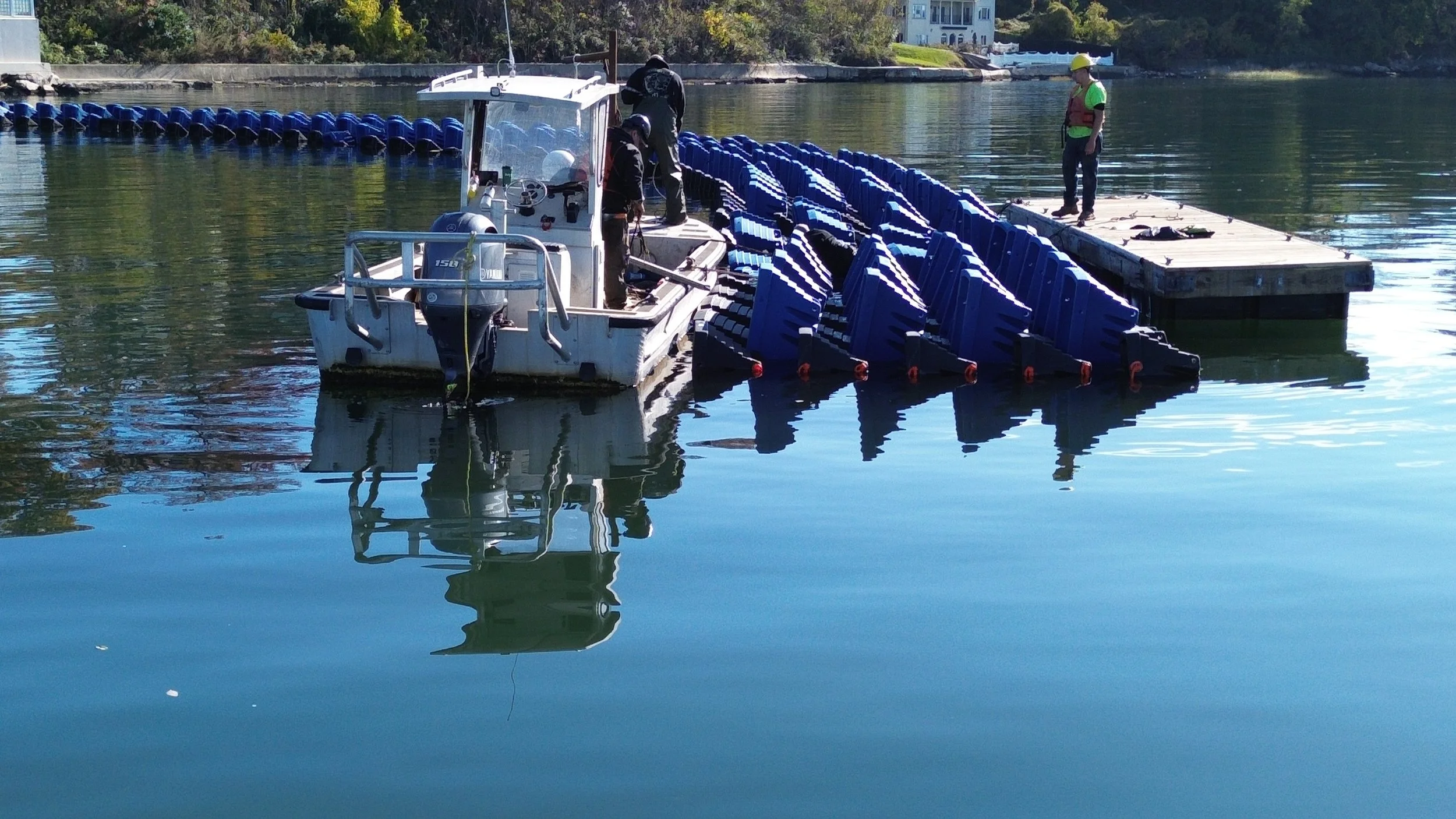
The most effective alternatives to seawalls are living shorelines, beach or bank nourishment, vegetated slopes and dunes, stone revetments, offshore reefs or sills, floating wave attenuators, and hybrid systems that combine two or more approaches. The best choice depends on why the shoreline is failing. A property exposed to repeated boat wakes needs a different solution from a low-energy marsh, a steep eroding bluff, or a coast exposed to long-period storm waves.
A seawall can be necessary where buildings or infrastructure sit immediately behind a shoreline and there is little room to reshape the edge. But a vertical wall treats the point of impact rather than reducing the wave before it arrives. Reflected energy, toe scour, loss of intertidal habitat, and effects on neighboring shorelines can become concerns. That is why many property owners evaluate alternatives to seawalls before committing to a hard vertical barrier.
Start With the Cause of Shoreline Damage
Shoreline retreat is not caused by a single process. Wind waves, boat wakes, currents, changing water levels, storm surge, groundwater, surface runoff, poor drainage, loss of vegetation, and sediment supply can all contribute. No protective structure can correct a problem it was not designed to address.
A proper evaluation should identify the dominant energy source, the direction waves approach, the seasonal water-level range, soil and sediment conditions, available space, nearby structures, navigation needs, and environmental constraints. It should also separate wave damage from flooding. A wave attenuator can reduce wave energy, but it does not stop water levels from rising during surge or river flooding.
1. Living Shorelines
A living shoreline uses native vegetation and natural materials to stabilize the edge while maintaining a connection between land and water. Depending on the region, a design may include marsh plants, coir logs, woody material, oyster structures, low rock sills, or planted terraces.
Living shorelines are strongest in low- to moderate-energy settings with enough horizontal space for a stable slope and vegetation zone. They can improve habitat, filter runoff, trap sediment, and adapt gradually as plants mature. They are less suitable as a stand-alone measure where direct wave attack is too strong for vegetation to establish. In those locations, offshore wave reduction may make a living shoreline possible.
2. Beach Nourishment, Dune Restoration, and Bank Regrading
Nourishment adds compatible sand, gravel, or sediment to replace material that has been lost. Regrading reduces an unstable bank angle, while native planting and erosion-control materials help hold the new surface. On sandy coasts, dune restoration can create a wider buffer that stores sediment and absorbs storm impact.
These approaches preserve a more natural shoreline appearance and can maintain access to the water. Their limitation is that sediment remains mobile. If the forces removing material are not reduced, periodic renourishment may be necessary. Drainage, upland runoff, and foot traffic also have to be managed.
3. Stone Revetments and Riprap
A revetment places graded stone or engineered armor along a sloped shoreline. Compared with a vertical seawall, the slope and voids between stones can dissipate more wave energy and reduce direct reflection. Proper filter layers, toe protection, stone sizing, and transitions at both ends are essential.
Revetments can protect steep banks and infrastructure where a nature-only approach is not strong enough. They still harden the shoreline, occupy space, and can affect habitat and access. Poorly sized or placed riprap can shift, settle, or allow soil to wash out from behind it, so loose stone placed without engineering is not a reliable substitute for a designed revetment.
4. Offshore Reefs, Sills, and Submerged Breakwaters
Offshore structures reduce wave energy before it reaches the bank. Low rock sills can shelter a marsh edge. Oyster reef structures may combine wave reduction with habitat goals where local ecology and water quality support them. Submerged artificial reefs can trigger wave breaking and create turbulence over and through the structure.
These solutions can support coastal erosion control while keeping the land-water boundary more natural. Their performance depends on crest elevation, width, gaps, alignment, water depth, wave period, and sediment transport. A fixed submerged structure also becomes more deeply submerged as water levels rise, which can change its effectiveness.
5. Floating Wave Attenuators
A floating wave attenuator sits offshore in the path of incoming waves and is held in place by an engineered anchoring system. It extracts energy through its interaction with the wave, reducing the height and motion transmitted into the protected area. Because it floats, the active portion rises and falls with normal changes in water level.
Floating systems can be useful for residential shorelines, community waterfronts, marinas, docks, lakes, rivers, and protected coastal waterways where boat wakes or short- to moderate-period waves are the main source of damage. They can be installed in deeper water without constructing a mound all the way from the bottom, and water can continue to circulate below the system.
The limitation is that system dimensions must be appropriate for the target waves. Long-period swell can transmit beneath a narrow or shallow-draft floating structure. Anchoring, currents, debris, ice, navigation, and extreme water levels also require careful engineering.
6. Hybrid Shoreline Protection
Many of the strongest projects combine offshore energy reduction with shoreline stabilization. A floating attenuator can calm the water so native plants can establish. A low sill can protect the toe of a planted bank. Nourishment can rebuild a beach behind an offshore reef. Targeted revetment can protect a critical structure while most of the shoreline remains living and accessible.
A hybrid design treats the system as a sequence: reduce energy in the water, control erosion at the edge, manage drainage from the land, and restore vegetation or sediment where practical. This often addresses more failure mechanisms than a single wall.
How to Choose Among Alternatives to Seawalls
Use the following questions to narrow the options:
What is being protected? A lawn, house, road, marina, wetland, and historic structure carry different risk tolerances.
What waves reach the site? Measure height, period, direction, frequency, and the difference between boat wakes and storm waves.
Is erosion occurring above or below the waterline? Surface runoff and bluff drainage need upland solutions, not only in-water protection.
How much space is available? Living shorelines and regraded banks usually need more horizontal room than a wall.
How does the water level change? Tide, reservoirs, rivers, and storm surge affect fixed and floating measures differently.
What are the downstream effects? Consider reflection, flanking, sediment movement, circulation, habitat, and neighboring properties.
What permits are required? Work below the ordinary high-water line often involves local, state, and federal review.
Why Reducing Wave Energy Offshore Can Be More Effective
When repeated wave impact is the main driver of erosion, working offshore addresses the force before it reaches the shoreline. Calmer water behind a wave attenuation system can reduce loading on docks, boats, banks, and stabilization measures at the edge. It may also make lower-impact shoreline treatments practical where they would otherwise be overwhelmed.
This does not eliminate the need to manage stormwater, groundwater, unstable soils, or elevated flood levels. It does, however, separate two jobs that are often confused: reducing wave energy in the water and stabilizing the land itself.
Why Wavebrake?
Wavebrake is a modular floating wave attenuator designed to reduce wave and wake energy before it reaches waterfront property. Its porous, multi-surface modules create drag, turbulence, and repeated changes in water movement, dissipating energy without depending on a continuous vertical wall at the shoreline.
The system can be configured in length, width, depth, and orientation and paired with an anchoring plan suited to local conditions. Wavebrake reports configurations capable of up to 85% wave attenuation; actual results depend on wave period, height, direction, water depth, layout, and other site variables. For many projects, the system can also be evaluated as the offshore component of a broader living-shoreline or bank-stabilization plan.
Ready to Protect Your Waterfront?
Every Wavebrake system is custom-engineered for your specific site. Get started today:
→ Request a Free Site Evaluation: https://wavebrake.com/site-evaluation-form
→ Visit Wavebrake.com